Inside DCAT: The State of Pharma Infrastructure in 2026
Pavan Kolluru · March 2026 · 5 min read
This week, we attended our first DCAT Week in New York City, which brought together both large and local players across the global pharmaceutical supply chain.
As non-members, we reached out aggressively — sending hundreds of messages and ultimately scheduling 20+ meetings, with many more conversations happening informally throughout the week.
We expected conversations to be around optimizing an already mature system of data, but we found that pharma's technology infrastructure is far more broken than most people assume.
Within such a large and highly specialized industry, each niche was experiencing the same underlying issue: companies knew they needed to evolve, but their infrastructure made it difficult to do so.
There were a few patterns we saw across nearly every conversation.
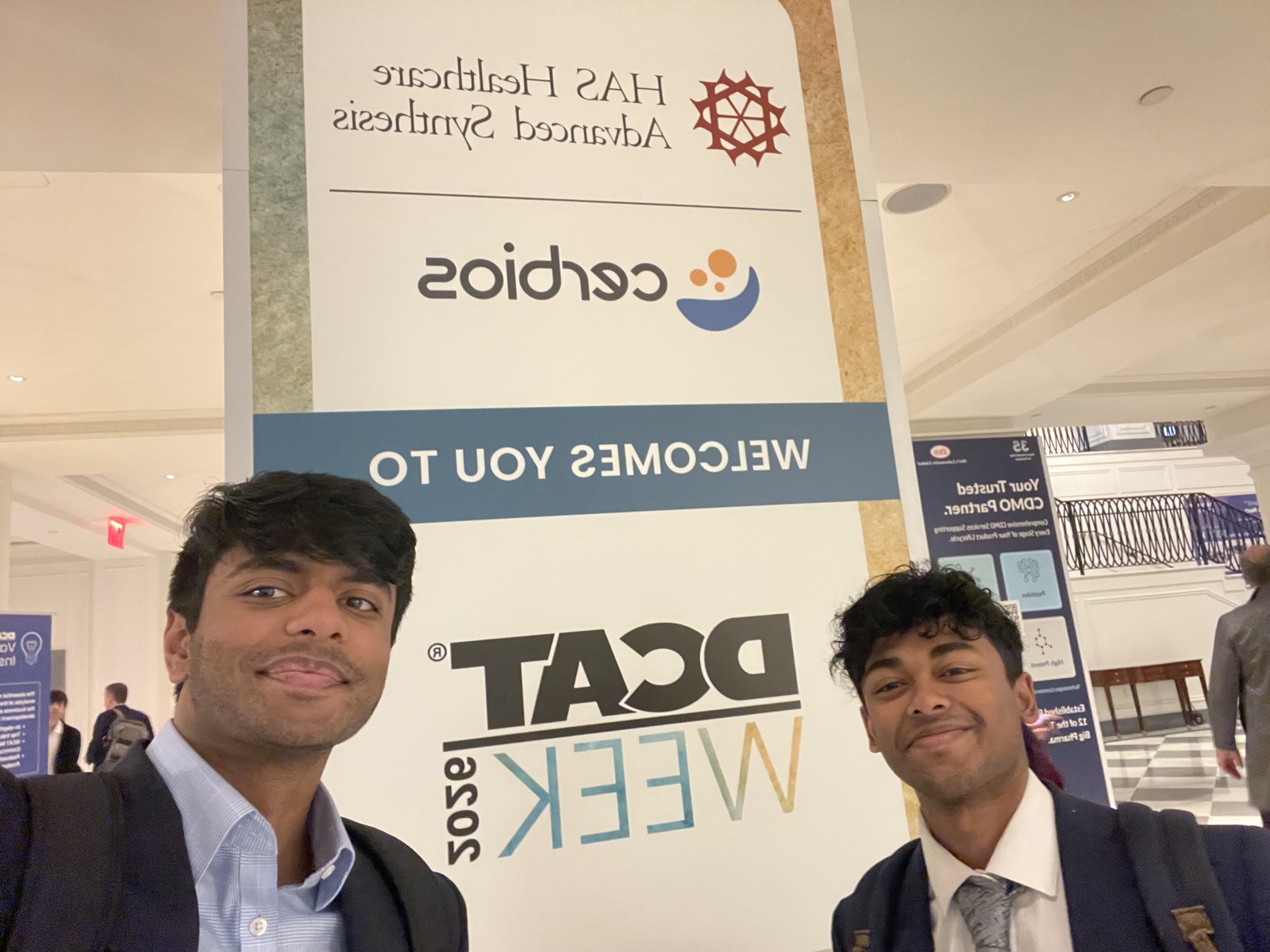
Co-Founders Rahul Kavuru (left) and Pavan Kolluru (right) at DCAT Week
3 Patterns We Saw Across Every Conversation
01
Pharma & Life Sciences Are Further Behind Than Most People Realize
It's no secret that this industry is slow to adopt new technology. While we expected to see teams that still rely on Excel rather than built-out platforms, some companies still rely on physical paper, folders, and manual tracking. In many cases, growth within the industry has outpaced internal technology. Teams weren't given the opportunity to modernize alongside it.
As a result, project teams were often stuck with archaic methods that, at times, are so outdated that upgrading them would require months-long overhauls that disrupt core operations.
The gap between scientific innovation and operational execution is far wider than we could have anticipated.
From DCAT Week
“I still print out contracts and documents, manually sign them, and store them in paper files because we don't have the technical infrastructure.”
02
AI Adoption Is Happening Now
Nearly every team that we spoke with mentioned they are actively shopping the market for AI tools. Some had exact use cases while others have no idea where to start. But the sentiment was consistent: if they are too slow to adopt, they can quickly lose competitiveness.
AI is no longer an early-stage curiosity for the space — it's an active market pull. As companies explore new AI solutions, they're constantly exposed to new possibilities. While they currently leverage general models like ChatGPT which is often wrong or too high-level, the active search is for a tool that knows the company internally without having an internal build out. The challenge isn't whether to adopt AI — it's how and where to begin.
From DCAT Week
“We're currently looking for AI tools, but our technology team is just 3 people.”
03
The Most Important Data Isn’t Written, It’s In People’s Heads
From analysts to executives, decisions in the industry are a result of habit.
Teams often rely on:
- •Vendors they're familiar with
- •Pricing knowledge passed down informally
- •Internal, non-documented “rules of thumb”
- •Cost tracking based on word of mouth
Over time, this creates workflows that are undocumented, prone to error, and irreversible. As markets become increasingly volatile, making smarter purchasing decisions requires hours of manual effort and research that is easy to mistake.
This constantly creates massive single points of failure and makes it difficult to standardize. More importantly, this becomes a core driver of why companies constantly spend beyond their means — they repeat inefficient workflows and incremental high spend grows drastically with time.
From DCAT Week
“We sell all across the world but cannot manage information from each geography that affects us.”
What This Means For Us
For anyone building in this space, it's clear that there is a demand.
Teams are looking to adopt quickly and see meaningful impact, but simply don't know where to start. The core challenge isn't just applying AI, it's pulling in data from manual and siloed systems and making sense of the madness. Individual systems currently take on tasks like purchases, accounting, and budgets, but never communicate with each other. Without any centralization of data, it's no surprise why companies find themselves with razor thin margins.
At Molterra, this is exactly what we are focused on solving.
Rather than replacing existing systems, we sit upstream of them and integrate into current workflows to bring intelligence directly into the decision-making process. In an industry this operationally entrenched, reducing friction is critical.
At the same time, relying on historical internal data is not enough.
One of the most consistent themes we saw was how “comfort” drives decision-making — teams default to what they know.
By incorporating external market signals, Molterra introduces a layer of objective reality that challenges those patterns and helps teams continuously optimize pricing, vendor selection, and overall spend.
This isn't about adding another dashboard, it's about changing how decisions happen before money is committed.
Closing
DCAT Week was an incredible experience for us and a reminder of how dangerous assumptions can be in this industry. Staying flexible and reactive to customer workflows is incredibly important, especially in a space that moves as fast as this one.
The companies that adopt new infrastructure will define the next decade of pharma. The rest will continue operating in the dark — making decisions without data, and paying the price without knowing.
Interested in how teams are starting to solve this?
See how Molterra works